
News Centre
News Type
Send your inquiry

Filled PTFE Compounds: Glass, Carbon and Bronze Explained
What Fillers Actually Do
A filler changes four properties at once. It raises compressive strength and reduces cold flow, so a seal or bearing holds its shape under sustained load. It improves wear resistance by interrupting the polymer surface and, in some cases, transferring a lubricating film to the counterface. It reduces thermal expansion and increases thermal conductivity, which keeps clearances predictable as temperature rises. And it inevitably changes chemical resistance, friction, and cost — usually for the worse on at least one of them. No single filler improves everything, which is why compounds are selected against a specific duty rather than picked by reputation.
Filler Comparison
Filler | Typical loading | Gains | Penalties |
Glass fibre | 15–25% | Creep resistance, stiffness, dimensional stability | Abrasive to soft counterfaces, reduced chemical resistance |
Carbon / graphite | 15–30% | Low friction, thermal conductivity, wear under dry running | Electrically conductive, dark colour |
Bronze | 40–60% | Best thermal conductivity and PV limit | Chemically attacked by acids and alkalis, abrasive |
Molybdic sulphide | 5–15% | Lower friction, better break-in | Limited effect on creep |
Carbon fibre | 10–20% | Highest stiffness, low expansion | Cost, conductivity, anisotropy |
Polymer fillers (PEEK, PPS) | 10–20% | Wear without abrasiveness | Lower creep improvement than glass |
Matching Filler to Application
· Seals and gaskets — glass or carbon filled for low creep where chemical compatibility allows
· Dry-running bearings — carbon and graphite filled for self-lubrication
· High-PV hydraulic wear rings — bronze filled, but never in acidic or alkaline service
· Chemical-resistant parts — polymer-filled or glass-filled only; bronze is unsuitable
· Structural insulators — glass fibre for stiffness and dimensional stability
· Food and pharmaceutical contact — verify the specific filler against the compliance requirement
The Counterface Matters as Much as the Compound
Filled PTFE is often selected without considering what it runs against. Glass and bronze filled grades are abrasive: they wear the shaft or bore faster than they wear themselves, and once the counterface is roughened, the seal fails regardless of the compound. Against soft stainless or aluminium, carbon and polymer fillers are far gentler. Surface finish also matters — a very smooth counterface can starve a filled PTFE of transfer film, while a properly honed one holds it. Seal failures attributed to the material are frequently counterface failures in disguise.
Availability and Machining
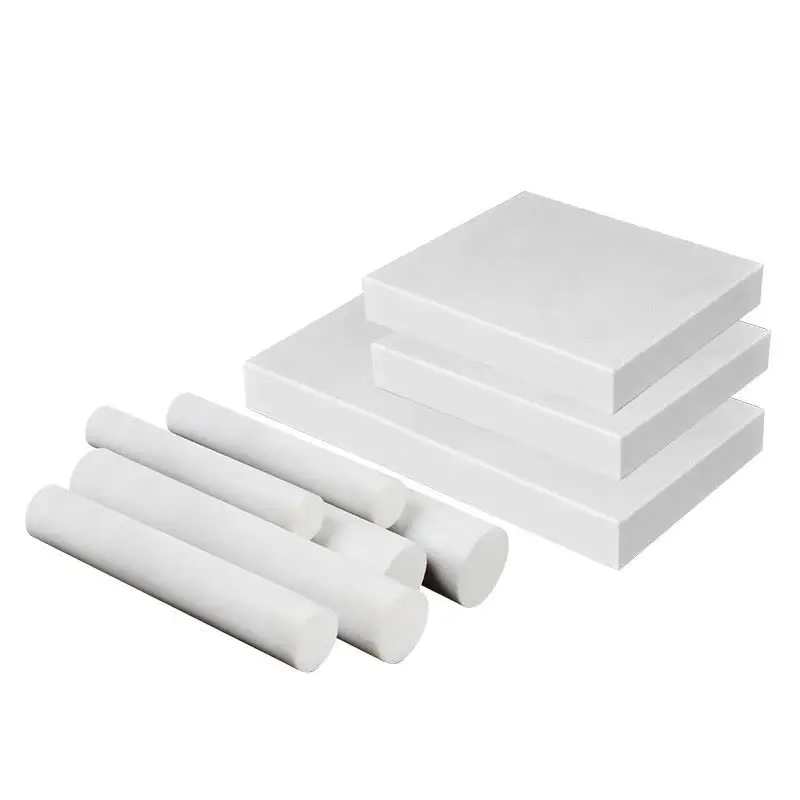
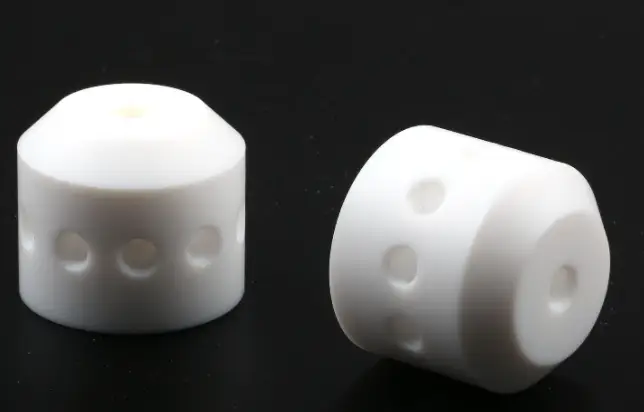
· Compression moulded sheet and rod in standard filler grades, plus near-net moulded shapes
· Filled PTFE machines like unfilled but chips differently — sharp tooling and light finishing cuts
· Annealing after machining reduces the risk of dimensional change in service
· Non-standard fillers are available at volume, not usually from stock
· Specify filler type and percentage, not just the colour or trade name
Related reading: PFA and FEP Fluoropolymers, PEEK Grades Guide, and Plastics for Hydraulic and Pneumatic Systems.
FAQ
Q1: Does filling PTFE reduce its chemical resistance?
Yes, usually. Glass is attacked by alkalis and hydrofluoric acid, and bronze by acids and alkalis. Polymer-filled grades retain the broadest resistance.
Q2: Which filled PTFE is best for bearings?
Carbon and graphite filled grades for dry running, bronze filled for high PV with good thermal conduction, and polymer filled where the counterface is soft.
Q3: Why does filled PTFE wear my shaft?
Glass and bronze fillers are abrasive. Use carbon or polymer-filled compounds against soft counterfaces, and check surface finish.
Q4: Can filled PTFE be used in food contact?
Only with the specific compound certified for the application. Fillers and processing aids are part of the compliance assessment, not just the base polymer.
Q5: What loading of glass fibre is typical?
Around 15 to 25 percent. Higher loadings increase stiffness and creep resistance but make the material more abrasive and more brittle.
Selecting a filled PTFE compound? Tell NAGOMER the load, speed, counterface and chemistry, and we will match the grade.
────────────────────────────────────────
NAGOMER — Professional Engineering Plastics Solutions
www.nagomer.com | info@nagomer.com