
News Centre
News Type
Send your inquiry

High-Performance Plastics Master Guide: PEEK vs PI vs PAI vs PEI vs PPS
The Master Comparison
Property | PEEK | PI | PAI | PEI (ULTEM) | PPS |
Continuous temp (°C) | 250 | ~250 (short 300+) | 250–260 | 170–180 | 200–240 |
Glass transition (°C) | 143 | >360 | ~275 | 217 | ~90 |
Tensile strength (MPa) | 90–100 | 70–100 | 130–190 | 105–120 | 80–90 |
Chemical resistance | Excellent | Good | Good (weak in alkali) | Good | Excellent |
Hydrolysis resistance | Excellent | Excellent | Poor | Good | Very good |
Radiation resistance | Excellent | Outstanding | Very good | Excellent | Very good |
Melt processability | Yes | No (sintered) | No (sintered) | Yes | Yes |
Relative cost | High | Highest | High | Medium–high | Medium |
One-Line Verdict for Each
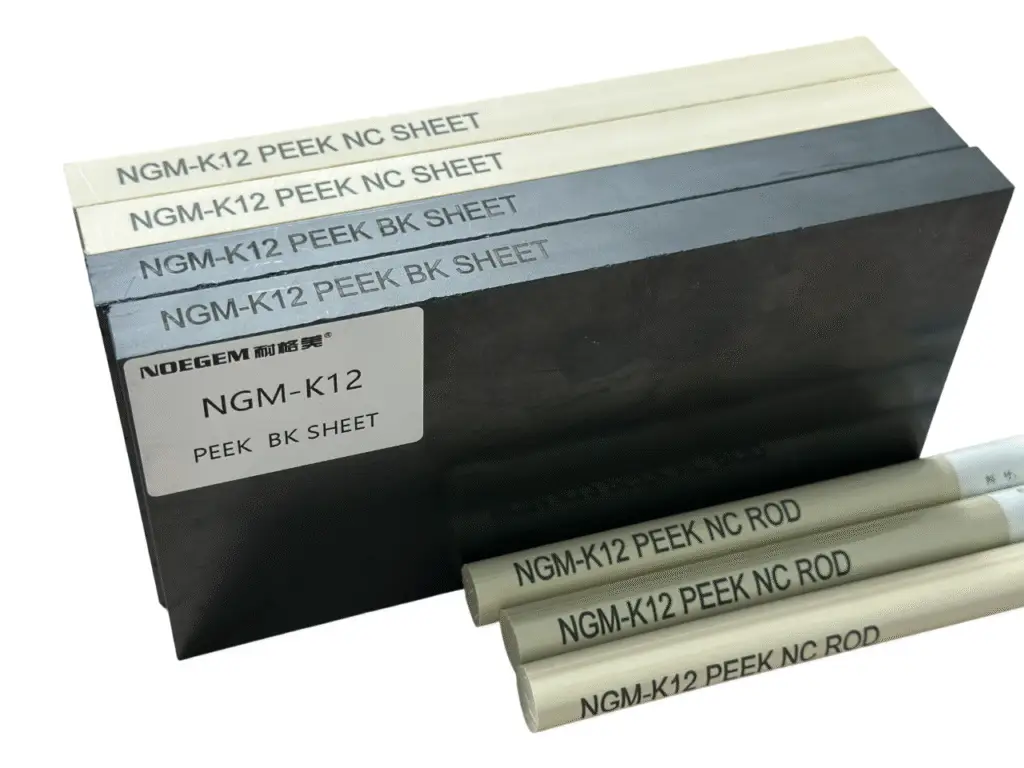
· PEEK — the all-rounder: heat, chemicals, wear, radiation; the default when budget allows
· PI — the temperature and radiation champion; unmachinable by melting, priceless in extreme duty
· PAI — the strength and wear king; avoid moisture and steam at all costs
· PEI — the transparent, low-smoke workhorse for electrical and transport interiors
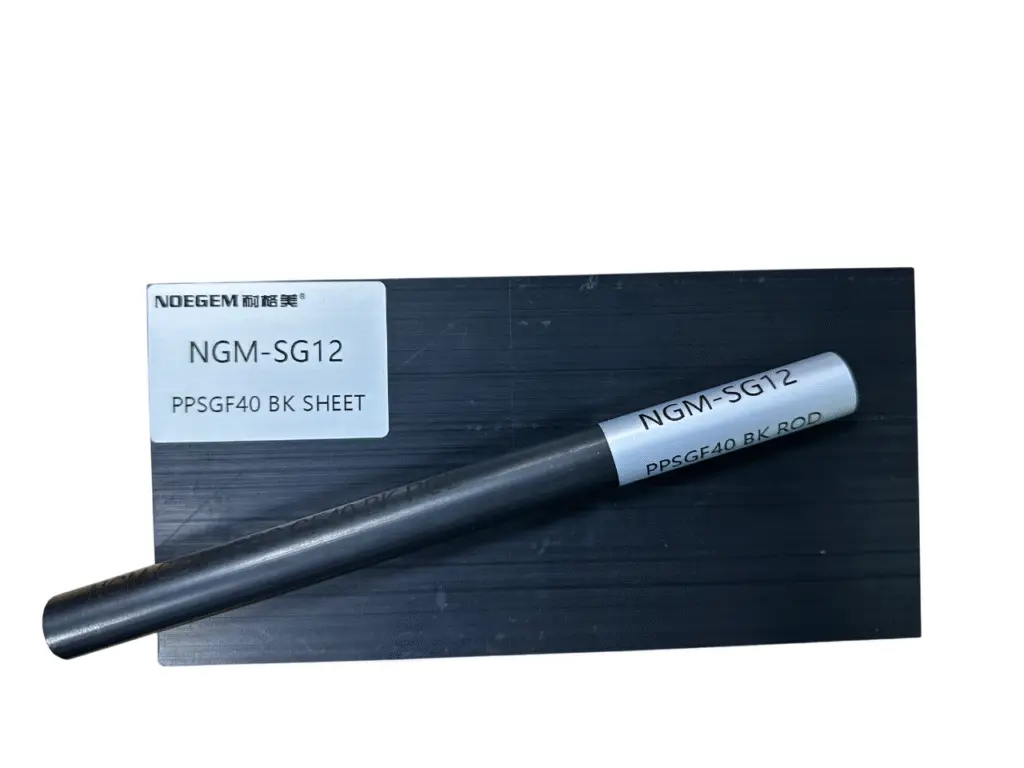
· PPS — the value option: most of the chemical and thermal performance at a friendlier price
A Selection Route That Works
Start with temperature: above 200°C continuous, the field narrows to PEEK, PI, and PAI. Add chemistry next — if hot water, steam, or aggressive media are present, PAI drops out immediately and PI needs checking against alkali. Add wear: under high PV and dry running, PAI-filled grades lead, with PEEK+PTFE+graphite close behind. Then check electrical and optical requirements, where PEI earns its place through transparency and tracking resistance. Finally, weigh cost: if PPS meets every hard requirement, it usually wins on economics. Most specification errors trace back to skipping a step in this order — usually chemistry.
The Filler Question
Fillers change the ranking more than polymer choice sometimes does. Glass fibre raises stiffness and cuts thermal expansion; carbon fibre adds conductivity and maximum stiffness; PTFE and graphite transform wear behaviour. A filled PPS can outperform an unfilled PEEK in a specific wear duty, and a filled PEI can match unfilled PPSU in stiffness. Evaluate the grade, not just the polymer family — and request data at your service temperature, because rankings can shift as temperature rises.
An example makes the route concrete. Suppose a part runs at 220°C in a weak alkaline wash, under moderate sliding wear, with no electrical requirement. Temperature narrows the field to PEEK, PI, and PAI; the alkali eliminates PAI and questions PI; wear is moderate, so PEEK with a graphite or PTFE filler is likely sufficient; and the answer is PEEK GF30 or a PEEK+PTFE+graphite blend, checked against the wash chemistry. The entire selection takes minutes when the steps are followed in order — and it avoids the expensive experiment of discovering a chemistry problem after the first production run.
Related reading: the individual guides in this series — PEEK Sheet, Polyimide (PI), PAI vs PEEK, PEI (ULTEM), and PPS GF40.
FAQ
Q1: Which high-performance plastic is most heat resistant?
PI, with a glass transition above 360°C and short-term capability beyond 300°C. PAI follows, then PEEK.
Q2: Which offers the best value?
PPS, when its 200–240°C service range and chemical resistance meet the duty. It delivers most of PEEK’s chemical performance at a lower cost.
Q3: Which should I avoid in hot water?
PAI hydrolyses badly. PEEK, PI, and PPS are the safe choices for steam and hot-water service.
Q4: Is PEI a substitute for PEEK?
Partially — for electrical housings and transport interiors below 180°C, yes. For chemical exposure, wear, or temperatures approaching 250°C, no.
Q5: Do fillers change these rankings?
Often, yes. Glass and carbon fillers raise stiffness and temperature stability; PTFE and graphite transform wear behaviour. Always compare the specific grades.
Choosing between high-performance polymers? Contact NAGOMER for grade-level data and machined samples in all five families.
────────────────────────────────────────
NAGOMER — Professional Engineering Plastics Solutions
www.nagomer.com | info@nagomer.com