
News Centre
News Type
Send your inquiry

Plastics for Data Centre Cooling: Liquid Cooling Hardware Materials
Where Plastics Fit in a Cooling Loop
Component | Material | Requirement |
Quick-disconnect couplings | PPSU, PPS, PVDF | Dimensional stability, chemical resistance, no leaks |
Manifold & distribution blocks | PPS, PVDF, PA | Pressure, glycol compatibility, long life |
Cold plate housings | PPS, PEEK | Thermal stability, dielectric properties |
Pump & flow-meter internals | PEEK, POM | Wear resistance in coolant, no ion release |
Seals & O-rings (hardware) | PTFE, EPDM, FKM | Coolant compatibility, compression set |
Tubing & hose fittings | PA12, PVDF | Flexibility, kink resistance, chemical stability |
Coolants Are Chemically Active
· Propylene and ethylene glycol mixtures — plus inhibitors, buffers, and biocides
· Dielectric fluids for immersion cooling — chemically stable but aggressive to some elastomers
· Deionised water — extremely aggressive to metals, but ideal for polymers
· High-purity loops where metal-ion leaching is a contamination concern
· Elevated temperatures at the chip side, up to 60–70°C in hot loops
Material Compatibility Is Not Optional
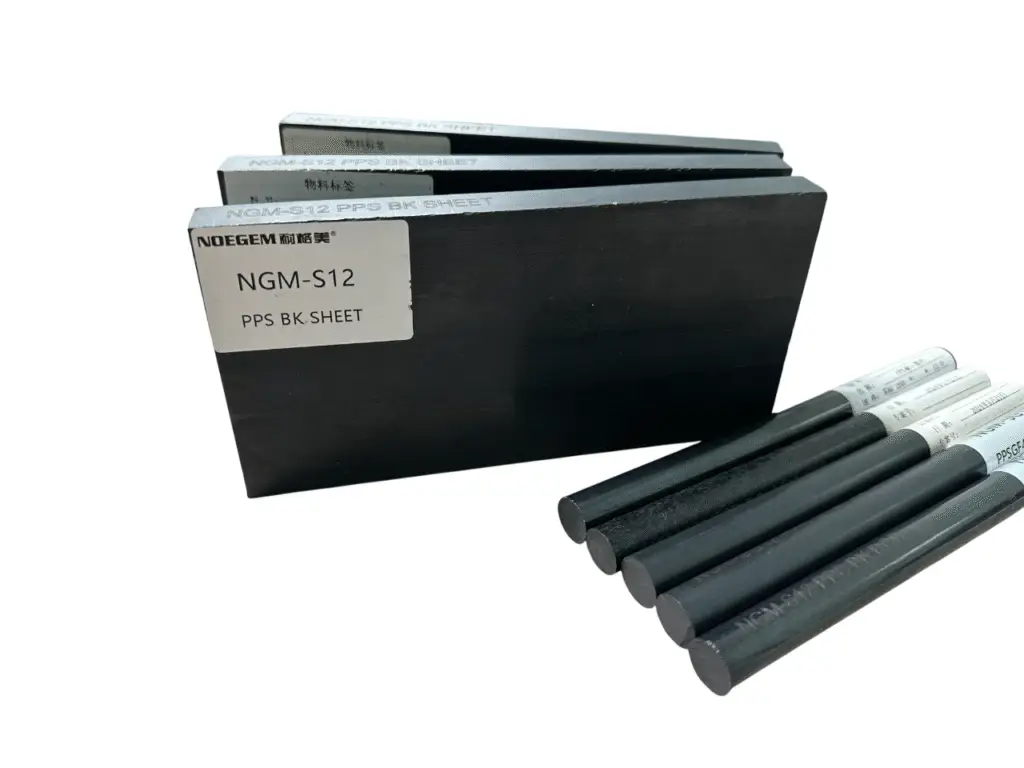
Coolant chemistry is where data centre cooling projects most often go wrong. A quick-connect that passes initial testing can swell, craze, or lose sealing force after thousands of thermal cycles. Polyamide absorbs water and can lose dimensional stability; POM handles glycol well but must be checked against specific inhibitor packages; PPS, PPSU, PVDF, and PEEK tolerate essentially all common coolant chemistries and are the safe specification for wetted parts. Elastomer seals deserve equal attention — EPDM suits glycol loops, FKM suits many dielectric fluids, and PTFE-based seals handle the widest range at the cost of higher cost and more careful installation.
Design and Reliability Priorities
· Design for zero leaks over a decade of continuous service — no metal-to-plastic sealing surprises
· Avoid galvanic couples where plastic housings meet metal fittings
· Specify materials with stable creep behaviour, since couplings stay under load for years
· Prevent contamination by avoiding internal dead zones and trapped fluid
· Choose grades with documented compatibility testing for the specific coolant
· Consider flame retardancy for components inside the rack enclosure
Why Plastics Keep Winning
The case for polymer hardware in cooling loops is straightforward. Plastics are lighter, which matters when hundreds of couplings hang from a rack manifold; they do not corrode in water or glycol; they can be moulded into complex internal geometries that would be costly to machine in metal; and they can eliminate the ion release that threatens high-purity loops. The remaining objections — temperature, pressure, and long-term creep — are addressed through material selection and design rather than by falling back on brass. NAGOMER supplies PEEK, PPSU, PVDF, and PPS stock shapes and machined prototypes for cooling hardware developers.
Related reading: PPSU & PSU Sulfone Polymers, Thermally Conductive Plastics, and Engineering Plastics for Pumps, Valves & Seals.
FAQ
Q1: Which plastics suit glycol cooling loops?
PPS, PPSU, PVDF, and PEEK handle glycol mixtures and most inhibitor packages well. Polyamide should be checked carefully because it absorbs water.
Q2: Can plastic quick-connects replace metal ones?
Yes, and they are increasingly standard — they are lighter, corrosion-free, and dimensionally stable if specified in the right grade.
Q3: What fails first in a liquid cooling loop?
Usually seals and elastomers rather than the structural polymer, which is why coolant compatibility testing should include the full seal stack.
Q4: Are plastics suitable for immersion cooling?
PEEK, PPS, and PPSU tolerate most dielectric fluids well, but compatibility must be verified with the specific fluid. Elastomer choice is usually the deciding factor.
Q5: Do plastic components contaminate high-purity loops?
Far less than metals, which is a primary reason for specifying polymers in deionised water and single-phase high-purity systems.
Developing liquid cooling hardware? Contact NAGOMER for coolant-compatible PEEK, PPSU, and PVDF components with testing support.
────────────────────────────────────────
NAGOMER — Professional Engineering Plastics Solutions
www.nagomer.com | info@nagomer.com