
News Centre
News Type
Send your inquiry

Plastics for Material Handling & Logistics Equipment
Where Plastics Are Used in Material Handling
Component | Material | Why |
Conveyor & chute guides | UHMW-PE, HDPE | Low friction, impact tolerance, quiet |
Rollers & wheels | PA, POM, PU | Load capacity, wear, rolling resistance |
Tote & tray components | PP, HDPE, POM | Impact resistance, cleanability |
Bumpers & end stops | PU, PA | Energy absorption without cracking |
Cable carriers & guides | PA, UHMW-PE | Flex fatigue, low friction |
Wear pads & slides | PET-P, UHMW-PE, POM | Long sliding life, dimensional stability |
Impact, Not Just Friction
Automated handling systems do not treat parts gently: totes are dropped, trolleys bump into end stops, and items fall onto chutes. Materials that excel in sliding wear are not always the best in impact, which is why PU and polyamide appear in bumper and wheel positions while UHMW-PE takes the sliding surfaces. Matching the material to the load type matters more than picking the hardest grade available — a brittle component that resists abrasion but cracks on first impact is worse than useless.
Noise and Workplace Comfort
· Polymer guides and rollers cut noise dramatically versus steel
· Softer PU wheels reduce impact noise on floor and rail interfaces
· Damping also reduces vibration that loosens fasteners over time
· Quieter systems correlate with longer component life — energy that is not radiated as noise is not being dissipated as wear
Maintenance and Spares Strategy
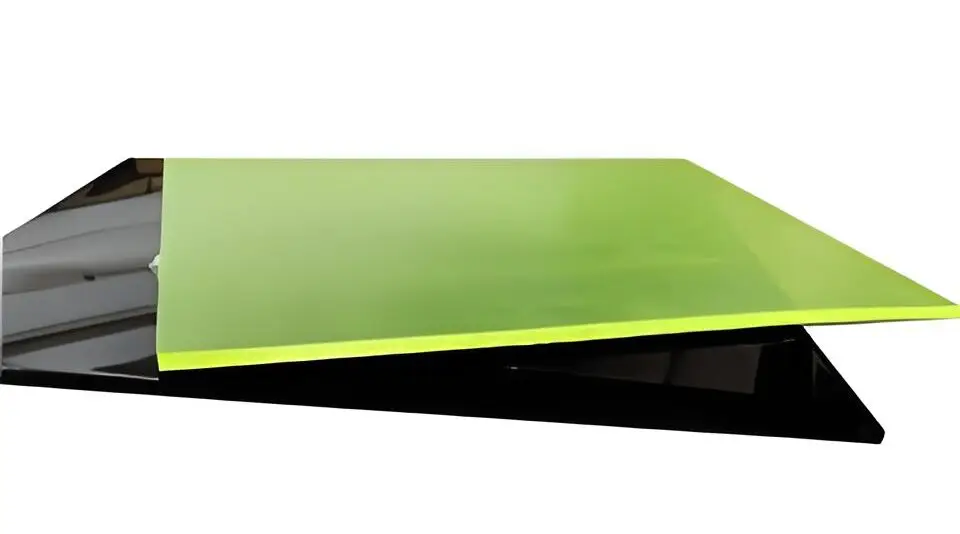
Logistics equipment is installed in large fleets and stays in service for many years. Machined polymer components make maintenance predictable: wear parts can be measured, scheduled, and replaced from stock rather than ordered as proprietary mouldings. That reduces downtime and avoids the common situation where a whole conveyor is derated because one obsolete guide cannot be sourced. NAGOMER machines wear pads, guides, rollers, and custom components in UHMW-PE, POM, PET-P, PA, and PU for logistics equipment builders and operators.
Cleanability and Cold Storage
Food and cold-chain logistics add two constraints. Washdown demands materials that do not absorb water or harbour bacteria, which favours UHMW-PE and POM over porous alternatives. Cold storage drops temperatures to −25°C and below, where plastics that pass impact tests at room temperature can shatter; UHMW-PE retains toughness even at cryogenic temperatures, while polyamide and POM need careful grade selection. Both constraints are best resolved by specifying the operating environment, not by defaulting to the cheapest stock shape available.
Related reading: UHMW-PE Sheet Guide, Plastics for Conveyor Systems, and Bearings & Bushings Material Selection.
FAQ
Q1: Which plastic is best for logistics wear pads?
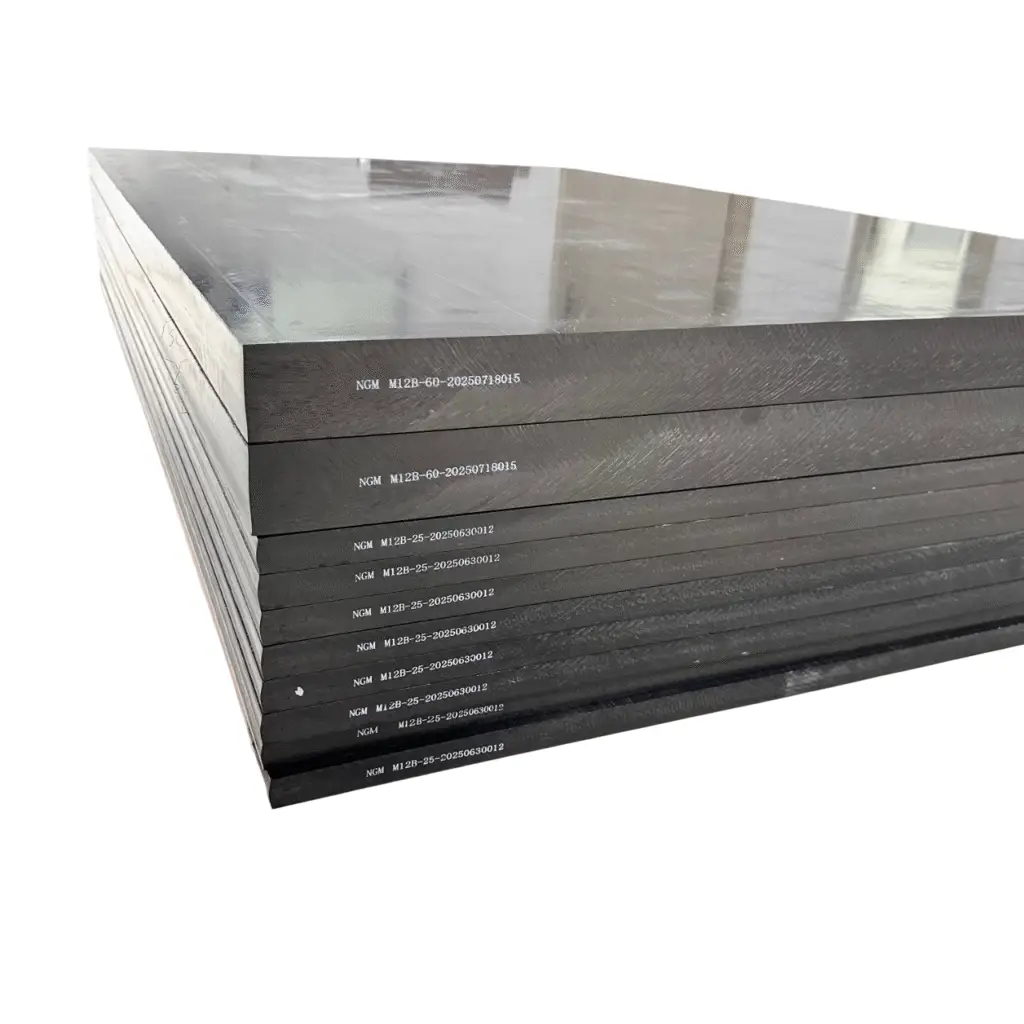
UHMW-PE for sliding wear, PET-P where dimensional precision matters, PU where impact dominates.
Q2: Do plastic rollers work in cold storage?
Yes, with the right grade — UHMW-PE keeps toughness at low temperature, while standard POM and PA grades can become brittle below −20°C.
Q3: How much noise reduction is achievable?
Replacing steel guides and wheels with polymer equivalents typically produces a clearly audible reduction, which is why noise is a standard specification in new automated systems.
Q4: Can plastic components be used in washdown areas?
Yes — UHMW-PE and POM absorb essentially no water and tolerate cleaning chemicals, making them preferred for food logistics.
Q5: Are machined wear parts available for older equipment?
Yes, and this is a major advantage: wearing parts can be reproduced from drawing or sample without mould tooling.
Upgrading a warehouse or handling system? Contact NAGOMER for machined UHMW-PE, POM, and PU components.
────────────────────────────────────────
NAGOMER — Professional Engineering Plastics Solutions
www.nagomer.com | info@nagomer.com