
News Centre
News Type
Send your inquiry

Plastics for Metal Finishing & Electroplating: Racks, Barrels & Tank Linings
Material Map for a Plating Line
Equipment | Typical Plastics | Environment |
Tank bodies & linings | PP, PVC, CPVC, PVDF | Acid or alkaline baths, 40–80°C |
Plating racks (jigs) | PP-coated steel, PEEK, PVDF | Live current plus immersion |
Barrel plating bodies | PP, PA | Tumbling load plus bath chemistry |
Heaters & coils | PTFE, PVDF, PFA | Direct immersion at temperature |
Pump & filter components | PP, PVDF, PEEK | Aggressive media, continuous duty |
Masking & plugs | PTFE, silicone | Stop-off duty, precision areas |
Chromic Acid Separates the Materials
Most plating chemistry is manageable for common plastics, but hard chrome plating changes the picture. Chromic acid is a powerful oxidiser that attacks many polymers, and its baths run hot. PVDF, PTFE, and PFA tolerate it; PP and PVC have limited life at elevated temperature. Similarly, hot alkaline cleaners and alkaline zinc baths penalise materials that hydrolyse — which rules out polyamide in most wet positions. Matching the polymer to the specific bath chemistry and temperature is not a formality in plating; it is the entire specification.
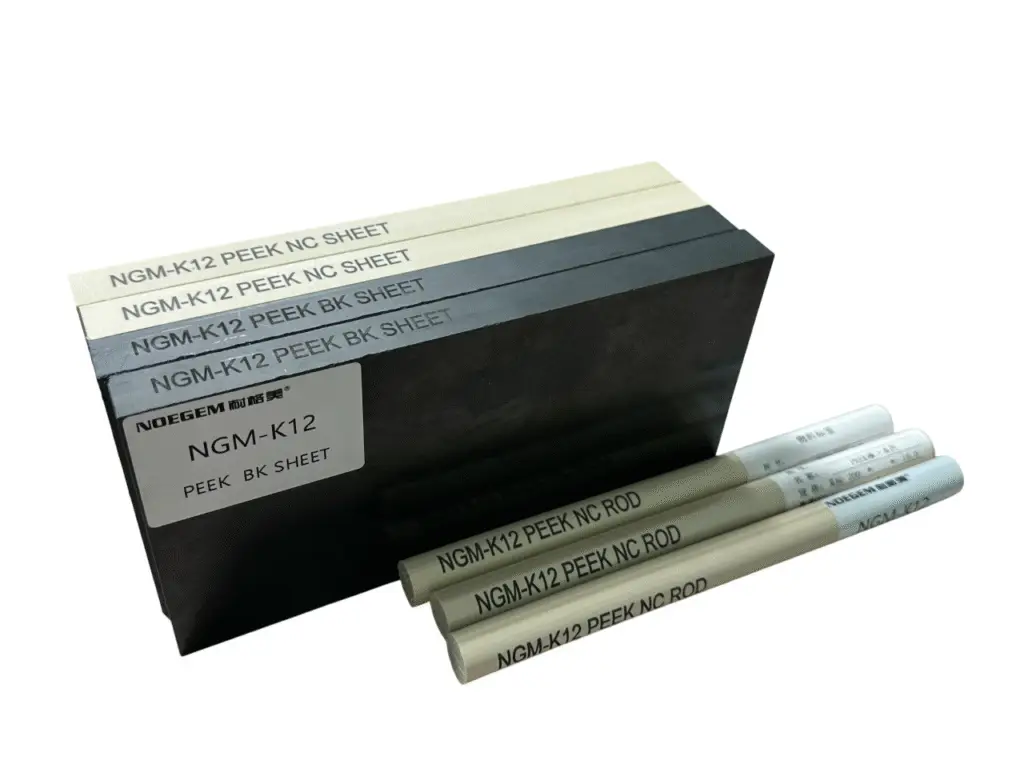
Racks: Where PEEK and PVDF Earn Their Cost
Plating racks carry the parts through the line and conduct current to them. The contact points and coatings see a brutal combination: immersion in the bath, live current, thermal cycling, and mechanical handling. Traditional coatings crack and allow solution wicking into the rack core, which then corrodes from inside and contaminates subsequent baths through drag-out. Premium rack tips and coatings in PEEK and PVDF resist the chemistry better, seal the core more reliably, and survive more re-coating cycles. For high-value parts and automated lines, the arithmetic strongly favours the premium polymers.
Current and Chemistry Together
An aspect unique to plating is that equipment operates live in the electrolyte. Stray current accelerates corrosion of any conductive part and can heat localised areas of polymers through resistance. Plastics are natural insulators, which is why they dominate tank construction — but design must still account for hot spots around contacts, chemical attack at the air-liquid interface where concentrations are highest, and mechanical damage from parts being loaded and unloaded. NAGOMER machines rack components, insulators, and custom fixtures in PEEK, PVDF, and PTFE for plating shops and equipment builders.
Selection Checklist
· List every bath chemistry, concentration, and temperature the component will see
· Include pre-treatment and post-treatment steps, not just the plating bath itself
· Verify oxidation resistance for chrome and other oxidising baths
· Design for drag-out minimisation to protect downstream baths
· Prefer weldable materials (PP, PVC, PVDF) for fabricated tanks and ducting
· Specify masking materials rated for the bath temperature, not just the chemistry
Related reading: PVDF Sheet Guide, PEEK Chemical Resistance Chart, and Engineering Plastics for Pumps, Valves & Seals.
FAQ
Q1: Which plastic resists chromic acid?
PVDF, PTFE, and PFA are the standard choices for chromic acid service, particularly at elevated temperature. PP and PVC have limited life in hot chrome baths.
Q2: Why are plating racks plastic-coated?
The coating insulates the rack except at contact points and protects the steel core from the bath. Premium coatings in PEEK or PVDF seal better and survive more cycles.
Q3: Can PP tanks handle hot chrome plating?
PP handles many plating chemistries but has limited life in hot oxidising chromic acid. Use lined or PVDF construction for chrome service.
Q4: What materials work for barrel plating bodies?
PP is the workhorse for acid and alkaline barrels; PA appears where mechanical toughness dominates. Chemistry and temperature decide.
Q5: How do plastics handle the electrical environment?
Naturally — plastics are insulators, which prevents stray-current corrosion of equipment and concentrates current where it belongs, at the parts.
Upgrading a plating line? Contact NAGOMER for PEEK, PVDF, and PTFE rack components and tank fittings machined to drawing.
────────────────────────────────────────
NAGOMER — Professional Engineering Plastics Solutions
www.nagomer.com | info@nagomer.com