News Centre
News Type
Send your inquiry

Plastics for Pulp & Paper: Chemical, Wear and Moisture Resistance
Where Plastics Are Used in a Mill
Position | Material | Why It Works |
Vacuum box covers & forming boards | UHMW-PE, filled grades | Low friction against fast-moving wire |
Foil & doctor blades | UHMW-PE, PET-P | Wear resistance, no wire damage |
Seals & packing | PTFE, filled PTFE | Chemical resistance in bleach and liquor service |
Bearing & guide components | PEEK composites, POM | Wet running, corrosion immune |
Screens & screening components | PA, PEEK | Abrasion plus chemical exposure |
Pipe & valve internals | PVDF, PEEK, PP | Chlorine dioxide and caustic resistance |
The Chemistry That Decides Material Choice
· Chlorine dioxide and hypochlorite — attack PA and POM; PVDF, PTFE, and PEEK resist
· Caustic soda at temperature — hydrolyses PA and PBT; PEEK and PPS are stable
· Sulphur-based cooking liquors — hot and alkaline; choose PEEK or PPS
· Steam and condensate — PEEK and PTFE handle repeated cycles; PA does not
· Fillers and coating pigments — abrasive; favour filled grades and UHMW-PE
Why Wet Running Changes the Rules
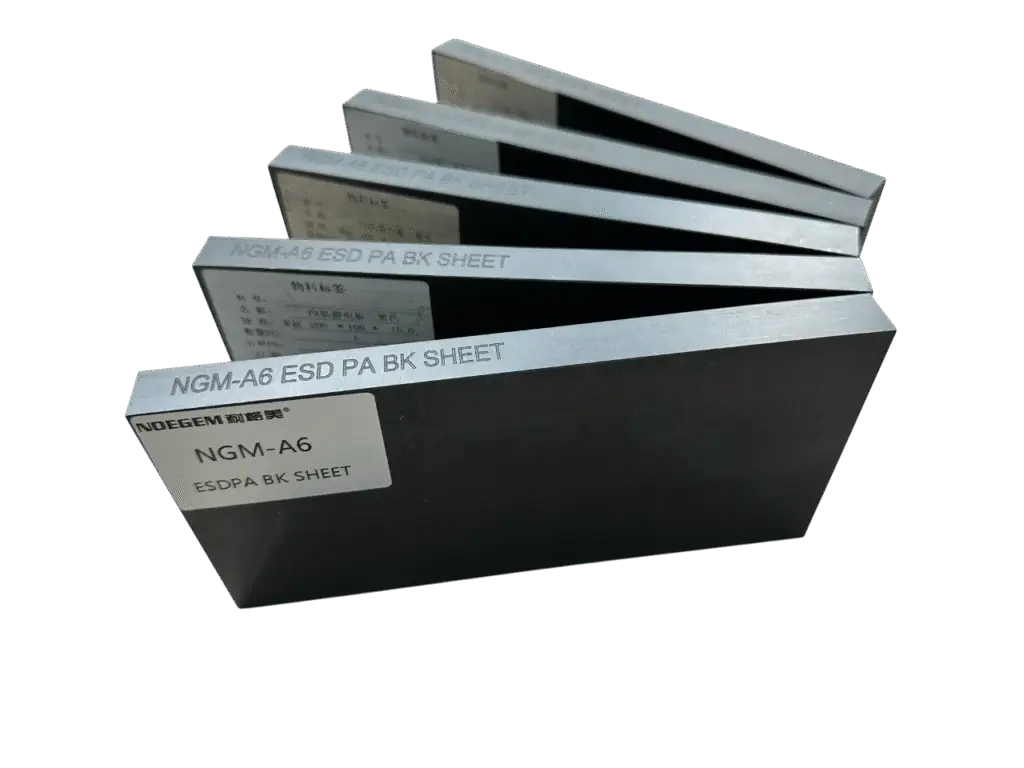
In a paper mill, water is not a contaminant — it is the process fluid and the lubricant. That flips normal material logic. Polyamide, usually a sensible choice for wear parts, is a poor fit because it absorbs water, swells, and softens in continuous wet service. PEEK, POM, PET-P, and UHMW-PE all maintain their properties while running wet, and they tolerate the reduced lubrication that follows a wash-down. Stainless steel, meanwhile, suffers from crevice corrosion under wet fibre deposits, which plastics avoid entirely. For positions where the wire or felt runs at speed, the low friction of UHMW-PE and PET-P also reduces drive power and wire wear — a benefit that shows up in the maintenance budget.
Maintenance Economics
Mills that have converted bronze and rubber components to polymer versions consistently report longer service intervals and less unplanned downtime. The reason is not exotic: polymer parts do not corrode during shutdowns, they do not require greasing, and they can be machined on site from stock rather than ordered as castings. In a plant running continuously at high capital cost, the difference between a three-week and an eight-week replacement interval is worth far more than the price of the part.
Specification Notes
· Confirm the cleaning and bleaching chemicals used, not just the process water
· Design for thermal expansion in long wear strips and box covers
· Mechanically fasten UHMW-PE components — adhesives will not bond reliably
· Allow for swelling and softening if any polyamide component is specified
· Plan replacement intervals based on wear measurement, not calendar time
Related reading: UHMW-PE Sheet Guide, PEEK Chemical Resistance Chart, and PET-P Sheet & Rod Guide.
FAQ
Q1: Which plastic is best for paper machine vacuum box covers?
UHMW-PE and filled grades dominate because of their low friction against a fast-moving forming wire and their resistance to wet abrasion.
Q2: Can plastics handle chlorine dioxide bleach?
PVDF, PTFE, and PEEK resist chlorine dioxide well, while polyamide and acetal degrade quickly. Material choice must reflect the actual bleaching sequence.
Q3: Why is nylon a poor choice in a wet mill?
PA absorbs 2.5–3% moisture, swells, and loses stiffness, which changes running clearances and accelerates wear in continuously wet service.
Q4: How do plastic parts reduce maintenance cost?
They do not corrode during shutdowns, need no lubrication, last longer, and can be replaced with parts machined from stock rather than castings.
Q5: Do plastics work in high-temperature pulp cooking areas?
PEEK and PPS handle hot alkaline liquors and steam; most other polymers do not. Temperature and chemistry must be assessed together.
Upgrading wear and sealing components in a mill? Contact NAGOMER for UHMW-PE, PEEK, and PET-P parts with chemical resistance data.
────────────────────────────────────────
NAGOMER — Professional Engineering Plastics Solutions
www.nagomer.com | info@nagomer.com