
News Centre
News Type
Send your inquiry

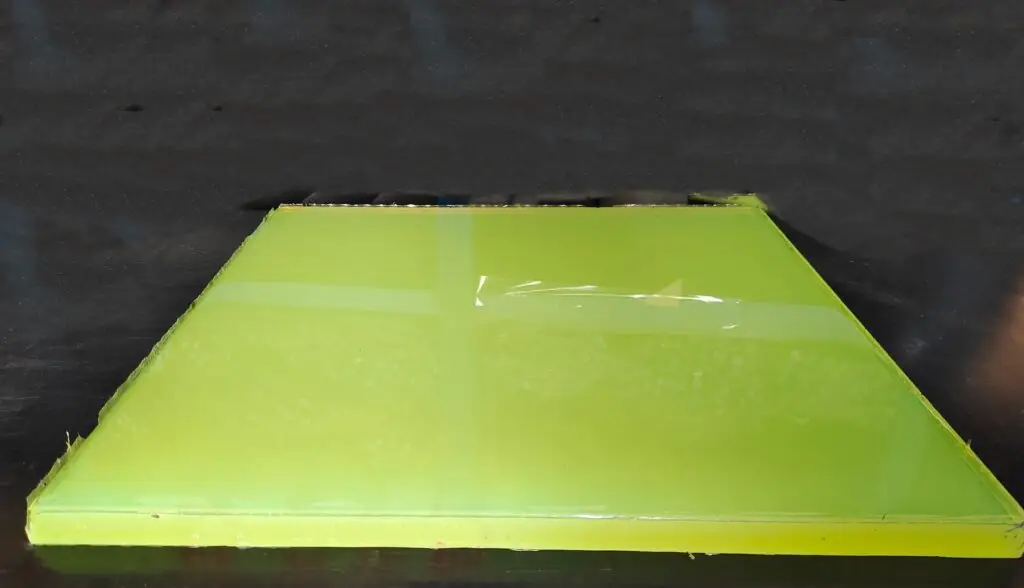
Polyurethane (PU) Sheet & Rod: Properties and Applications
Key Properties of Cast Polyurethane
· Hardness range: Shore A70 to Shore D75 — one material family, many behaviours
· Outstanding abrasion resistance, often several times that of rubber or steel
· High load-bearing capacity with good compression set resistance
· Excellent tear strength and cut resistance
· Good resistance to oils, greases, and aliphatic hydrocarbons
· Continuous service temperature: roughly −20°C to +80°C
· Machinable, bondable, and available cast to near-net shape
Hardness Selection Guide
Hardness | Behaviour | Typical Use |
Shore A70–A85 | Soft, high grip | Scraper blades, seals, drive rollers |
Shore A90–A95 | Firm elastomer, high resilience | Conveyor rollers, wheels, pads |
Shore D50–D60 | Semi-rigid, wear resistant | Wear plates, impact bars, guides |
Shore D70–D75 | Rigid, machinable | Structural pads, spacers, bushings |
Hardness determines almost everything else: higher durometer gives better cut and wear resistance but less grip and less impact absorption. Specifying hardness is more useful than naming a grade.
Where PU Beats Rubber and Plastic
Compared with rubber, cast PU delivers far better abrasion resistance and higher load capacity at the same hardness, plus better cut and tear resistance — which is why PU replaces rubber in mining screens, scraper blades, and drive rollers. Compared with rigid plastics, PU absorbs impact without cracking and maintains grip on driven surfaces. The trade-off appears with heat and moisture: ester-based PU hydrolyses in warm humid conditions, while ether-based grades resist it far better. And PU is not a heat-resistant material — above roughly 80°C it softens and creeps, which rules out many hot-process positions where PEEK or PPS would be needed.
Machining and Bonding
· Use sharp, high-rake tooling and high cutting speeds — cold PU cuts cleanly
· Cool with air or water-miscible coolant to prevent heat softening during machining
· Bond PU to metal with appropriate primers; bonding is common for rollers and wheels
· Avoid over-compression in service — PU set is low but not zero
· Specify ether-based grades for humid, wet, or outdoor service
Common Applications
· Mining and aggregate — screen panels, chute liners, scraper blades
· Materials handling — drive rollers, idler wheels, bump stops
· Food processing — squeegee blades, cutting surfaces in washdown areas
· Packaging — film rollers, belts, and guide pads
· Industrial — seals, diaphragms, couplings, and wear plates
Related reading: UHMW-PE Sheet Guide, Bearings & Bushings Material Selection, and Plastics for Mining & Bulk Material Handling.
FAQ
Q1: What is the difference between cast PU and rubber?
Cast PU offers significantly better abrasion and cut resistance, higher load capacity at equivalent hardness, and it can be machined. Rubber remains preferable for high-temperature and highly flexible duties.
Q2: Is PU suitable for outdoor use?
Ether-based grades are — they resist hydrolysis in humid and wet conditions. Ester-based grades degrade faster outdoors and in warm humid environments.
Q3: What temperature can polyurethane handle?
Roughly −20°C to +80°C continuous. Above that it softens and creeps; above 100°C most formulations deteriorate quickly.
Q4: Can PU parts be machined from sheet?
Yes — cast PU sheet and rod machine cleanly with sharp, high-rake tooling and adequate cooling. This is the standard route for prototypes and low-volume parts.
Q5: Why does PU outperform steel in some wear duties?
In abrasive sliding and impact wear, PU absorbs energy and deforms locally instead of work-hardening and gouging. It also cannot corrode.
Need PU rollers, pads, or wear parts? Contact NAGOMER for cast polyurethane components in your required hardness.
────────────────────────────────────────
NAGOMER — Professional Engineering Plastics Solutions
www.nagomer.com | info@nagomer.com